United States Air Force
H is for HawkThe United States Air Force is part of the human-made landscape through which Helen Macdonald frames her search for goshawks in the Brecklands. Its bases and the sound of aircraft help define the region’s character, while a family memory of an unfamiliar American plane connects military aviation to the book’s reflections on observation, secrecy, and historical change.
Presence in the Brecklands
The Brecklands are introduced as a place where natural and military features coexist. Pine forestry, sand, farms, and wildlife share the landscape with United States Air Force bases; in spring, the steady passage of aircraft is one element in a mixture of jet engines, bird calls, and gas-guns over fields. The military presence is not treated as a separate backdrop: it is woven into the region’s ordinary sounds and its unsettled, worked-over character.
Military infrastructure also appears in the account of the land’s less visible features. Behind high fences, grassy mounds conceal spaces built for air-delivered nuclear weapons. The passage places these sites alongside other incongruous features of the region, including tattoo parlours and United States Air Force golf courses. It does not specify who operates the concealed facilities, but their presence makes the possibility of aerial warfare part of the landscape’s material history.
Aviation and family memory
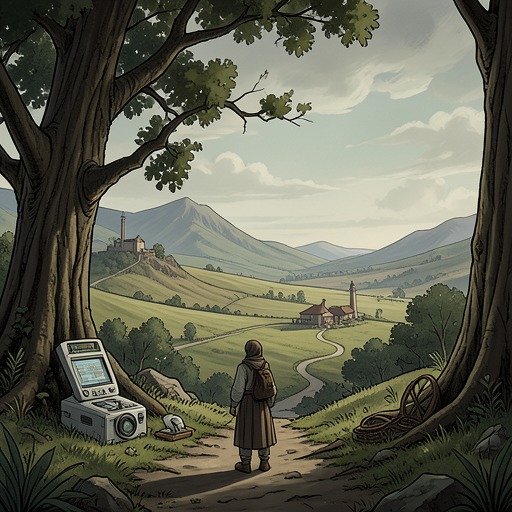
The United States Air Force also enters through a remembered episode from Helen’s father’s childhood. At Biggin Hill, the boy photographs aircraft with a Box Brownie camera and records their registration numbers in a notebook. One evening, he hears an unfamiliar engine and sees an aircraft he cannot identify from his books: a new American Air Force plane, experienced by the young plane-spotter as a remarkable arrival from the future.
The memory ties military aviation to the habits of close looking that recur throughout the book. The boy’s camera and notebook turn the aircraft into objects of observation and record, while the plane’s unfamiliarity marks a moment when the present seems to open onto a changed future. The United States Air Force is not shown directing this encounter; it is represented through the aircraft that draws the boy’s attention and becomes part of his story.
A landscape shaped by human histories
The organization’s presence belongs to a broader account of the Brecklands as neither untouched wilderness nor a landscape with a single history. A bomb crater from a German wartime raid has become a pond among the dunes, while pine forests planted in the 1920s for future timber needs cover much of the shifting sand. Military aviation, wartime damage, forestry, and wildlife are thus held together in a place where human activity has repeatedly altered the conditions of the land.
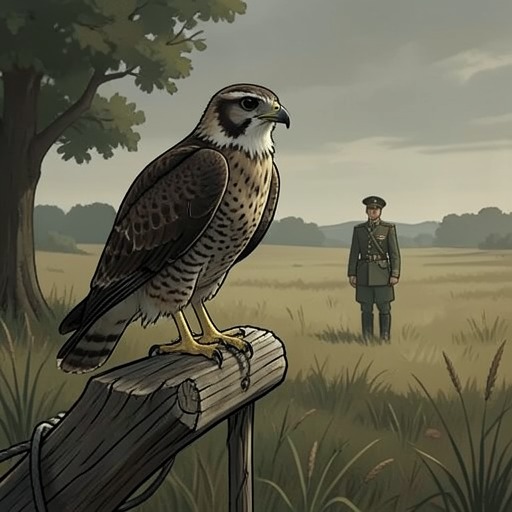
That layered setting matters to the goshawk narrative. Helen seeks the birds in a region whose wildness has been shaped by human use, and the return of goshawks to Britain is itself connected to human action: falconers imported birds and released others, after which the population survived and bred. Against this history, the United States Air Force’s bases and aircraft contribute to the book’s portrait of a countryside where apparently distinct worlds—military infrastructure, working land, and wildlife—occupy the same terrain.